
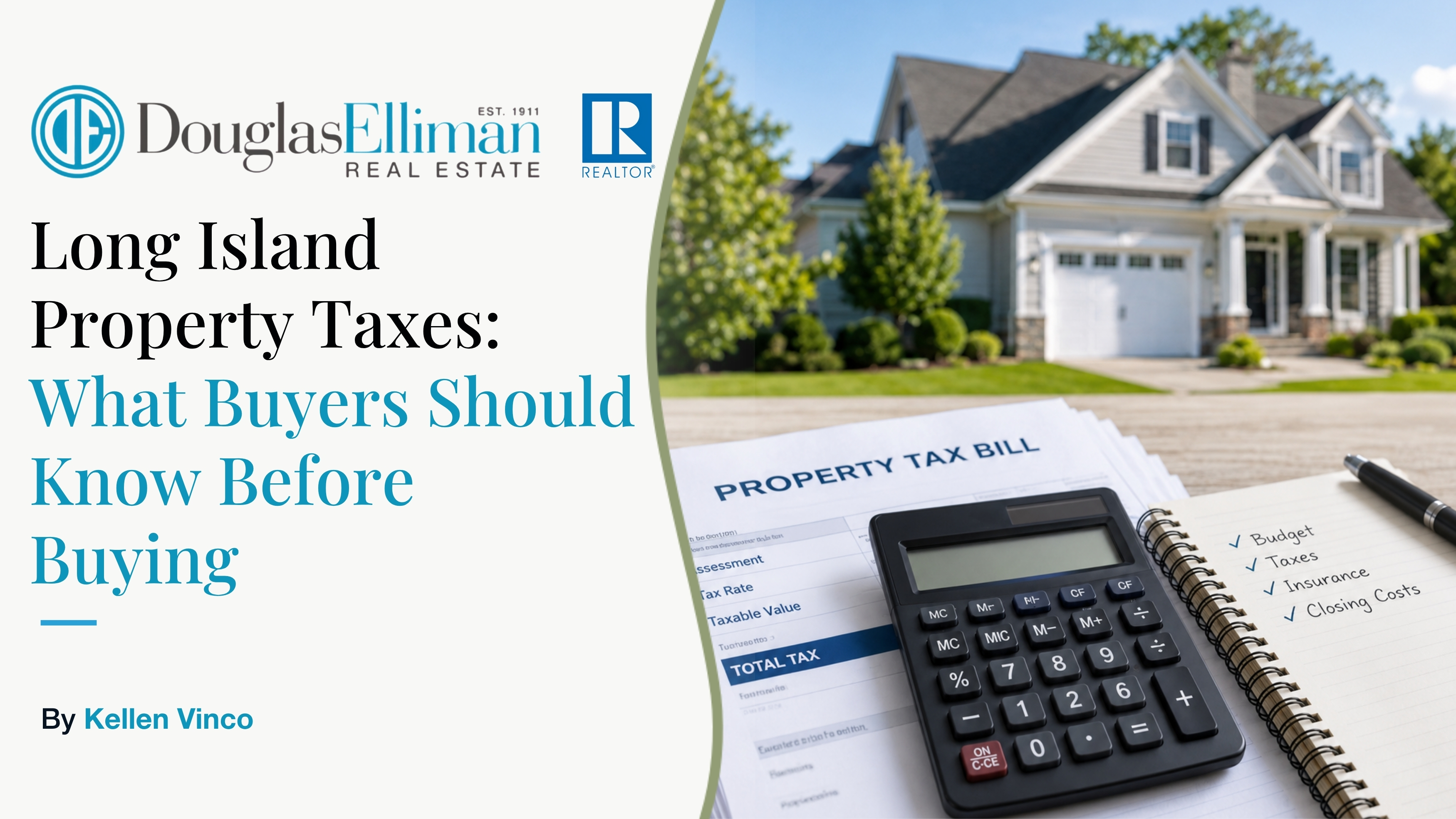
When buyers start looking at homes on Long Island, the first number they usually notice is the list price. But the number that often shapes the real monthly budget is the property tax bill.
This matters in Nassau County, Suffolk County, and communities such as Smithtown, Hicksville, Dix Hills, Commack, Huntington, and Northport. Two homes can have similar prices and very different monthly payments because the taxes are not the same.
If you are a first-time buyer, ITIN buyer, relocating buyer, Spanish-speaking buyer, or investor, property taxes should be part of the conversation before you fall in love with a home.
Key takeaway: The right Long Island real estate decision comes from matching the home, numbers, neighborhood, commute, taxes, and lifestyle, not just liking the photos.
Property taxes are part of your monthly housing cost, and on Long Island they can be large. Two homes with the same price can have very different payments. Ask for the latest tax bill, check which exemptions are included, and plan to register for your own STAR credit after closing.
Why do property taxes matter so much when buying on Long Island?
Property taxes matter because they are part of your monthly housing cost. A buyer may qualify based on price, but the real payment can feel different once school taxes, town taxes, insurance, and escrow are included.
On Long Island, the school district is often one of the largest parts of the total tax bill. Buyers should review current annual taxes, school district, assessed value, exemptions, and whether the number includes savings that may not apply to the next owner.
What should buyers check before relying on the listed tax number?
A listed tax number is a starting point, not the whole answer. Buyers should ask for the most recent tax bill and check whether STAR, senior, veteran, or other exemptions are included.
- Current annual taxes
- School district and local district charges
- STAR or other exemptions
- Assessed value and possible reassessment
- Town, village, fire, library, sanitation, or water charges
What is STAR, and can new homeowners use it?
STAR is New York’s School Tax Relief benefit. Many new homeowners register for the STAR credit rather than assuming a previous owner’s exemption will carry over.
Buyers should ask whether the current tax number includes STAR or another exemption, and what the tax picture could look like after closing.
How do taxes affect first-time buyers?
First-time buyers often focus on saving for the down payment, but taxes can affect monthly affordability just as much. A home that looks affordable based on price alone may feel different when the full payment is calculated.
Before touring seriously, buyers should prepare a full budget that includes down payment, closing costs, property taxes, homeowners insurance, possible mortgage insurance, utilities, maintenance, and reserves.
How can Kellen help buyers review the real numbers?
Kellen Vinco helps buyers look beyond photos and list price. With 25+ years of property management insight, she helps clients ask practical questions about taxes, condition, monthly comfort, and long-term fit.
Kellen can help buyers organize the real estate side of the process and connect them with the right professionals for lending, legal, tax, and property-specific questions.
Helpful next steps
- STAR credit for new homeowners on Long Island
- Closing costs on Long Island for buyers
- First-time home buyer programs on Long Island
- How to check if a house is in a flood zone
- How to choose a Long Island realtor: 12 questions to ask
- Search Long Island homes and compare active listings.
- Review Kellen’s Buyer Guide for budget, process, and readiness steps.
- Read ITIN buyer guidance for non-traditional financing questions.
- Explore Long Island neighborhoods including Smithtown, Hicksville, Dix Hills, Commack, Huntington, and Northport.
- Visit Douglas Elliman Real Estate.
- Register for the STAR credit (NY Tax Department).
- See how taxes show up on your Loan Estimate (CFPB).
- Check New York STAR homeowner resources.
This article is for informational purposes only and is not legal, tax, mortgage, or financial advice. Always confirm property-specific taxes, lending, legal terms, and local rules with the appropriate licensed professionals.

Kellen helps Long Island buyers and sellers in English and Spanish, with 25+ years of property management experience behind every home she walks through.